Dial-in flowcharts for espresso, pour over and immersion
These are the decision trees behind Fix my brew in mikron. Each goes from taste to cause to fix, one change at a time. In the app they are interactive: you say what you taste, and it walks the tree for you. For a single symptom, jump straight to a troubleshooting guide: sour espresso, bitter espresso, fast shot, slow shot, sour pour over, bitter pour over, weak coffee, or astringent coffee.
Espresso tastes sour, bitter or muddy
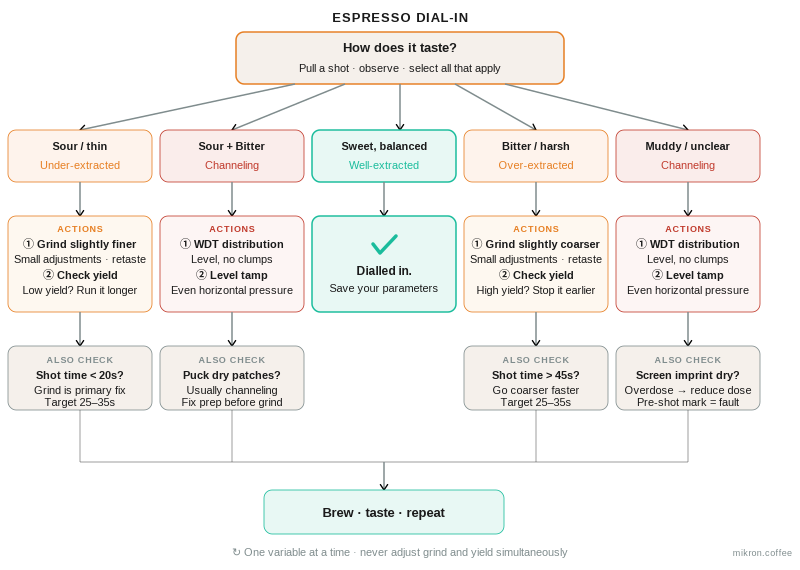
| If it tastes | Likely cause | Try, in this order | Also check |
|---|---|---|---|
| Sour / thin | Under-extracted |
| Shot time < 20s? Grind is primary fix. Target 25–35s. |
| Sour + Bitter | Channeling |
| Puck dry patches? Usually channeling. Fix prep before grind. |
| Sweet, balanced | Well-extracted | Dialled in. Save your parameters | |
| Bitter / harsh | Over-extracted |
| Shot time > 45s? Go coarser faster. Target 25–35s. |
| Muddy / unclear | Channeling |
| Screen imprint dry? Overdose → reduce dose. Pre-shot mark = fault. |
One variable at a time · never adjust grind and yield simultaneously.
Pour over or drip tastes sour, bitter or flat
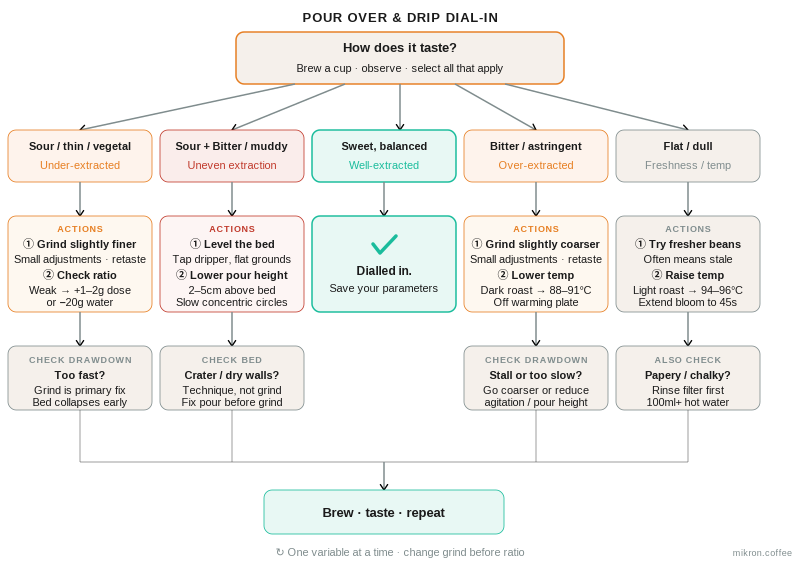
| If it tastes | Likely cause | Try, in this order | Also check |
|---|---|---|---|
| Sour / thin / vegetal | Under-extracted |
| Too fast? Grind is primary fix. Bed collapses early. |
| Sour + Bitter / muddy | Uneven extraction |
| Crater / dry walls? Technique, not grind. Fix pour before grind. |
| Sweet, balanced | Well-extracted | Dialled in. Save your parameters | |
| Bitter / astringent | Over-extracted |
| Stall or too slow? Go coarser or reduce agitation / pour height. |
| Flat / dull | Freshness / temp |
| Papery / chalky? Rinse filter first. 100ml+ hot water. |
One variable at a time · change grind before ratio.
French press or AeroPress tastes sour, muddy, hollow or bitter
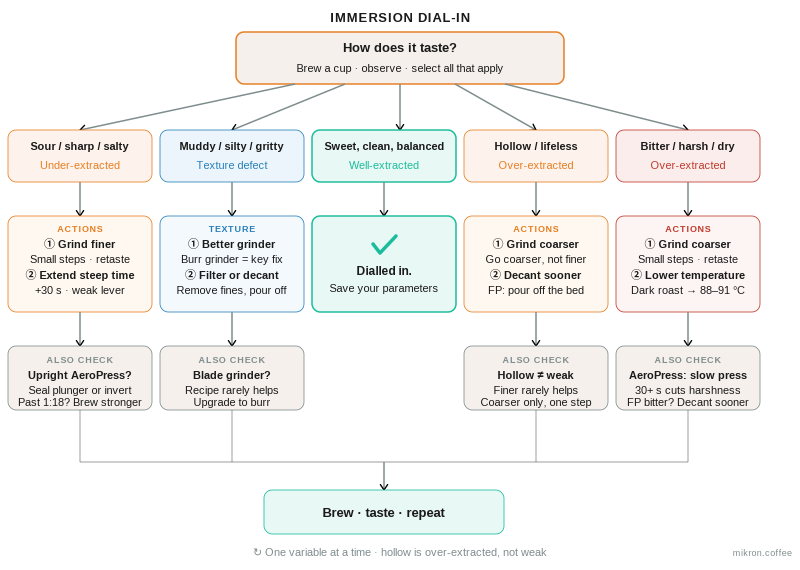
| If it tastes | Likely cause | Try, in this order | Also check |
|---|---|---|---|
| Sour / sharp / salty | Under-extracted |
| Upright AeroPress? Seal plunger or invert. Past 1:18? Brew stronger. |
| Muddy / silty / gritty | Texture defect |
| Blade grinder? Recipe rarely helps. Upgrade to burr. |
| Sweet, clean, balanced | Well-extracted | Dialled in. Save your parameters | |
| Hollow / lifeless | Over-extracted |
| Hollow ≠ weak. Finer rarely helps. Coarser only, one step. |
| Bitter / harsh / dry | Over-extracted |
| AeroPress: slow press. 30+ s cuts harshness. FP bitter? Decant sooner. |
One variable at a time · hollow is over-extracted, not weak.
The flowcharts are published under CC BY 4.0: share and adapt them, including commercially, with attribution to mikron. The charts render on paper-white for print fidelity in both themes.
Fix my brew in the app walks these same decision trees for your cup.